




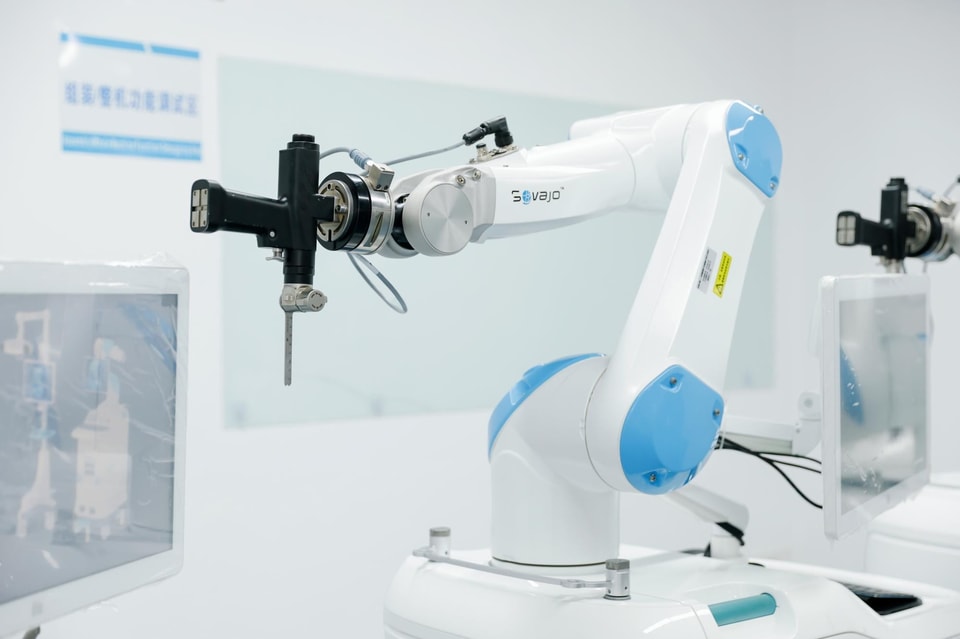
Sovajo Orthopedic Surgical Robots for Precision Medicine
Advanced robotic solutions for total knee arthroplasty, hip arthroplasty, spine, trauma and minimally invasive orthopedic surgery.
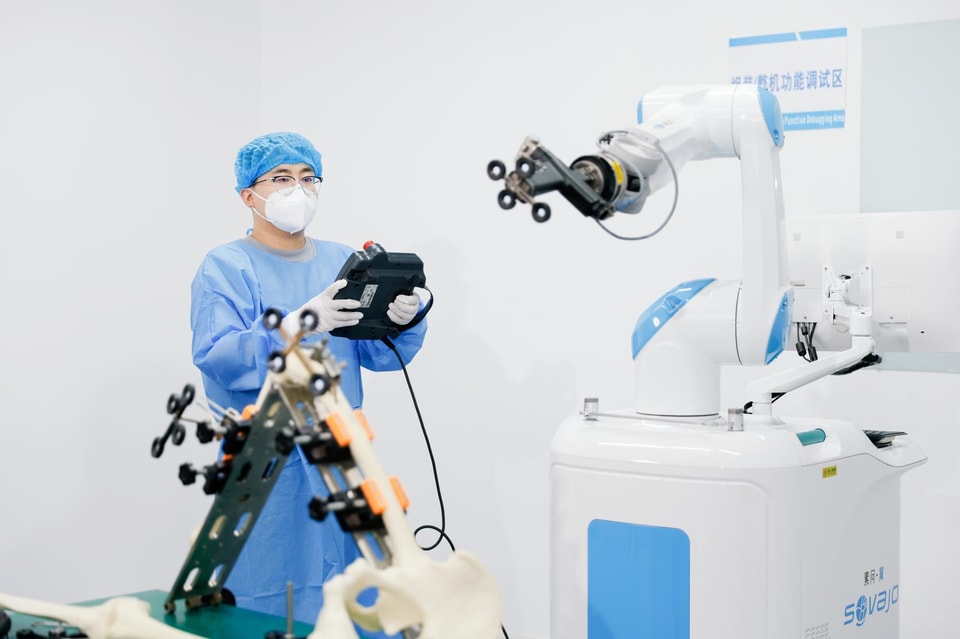
Robotic Solutions for Joint Replacement Surgery
Support surgeons with accurate planning, intraoperative navigation and stable robotic execution across TKA, UKA and THA procedures.
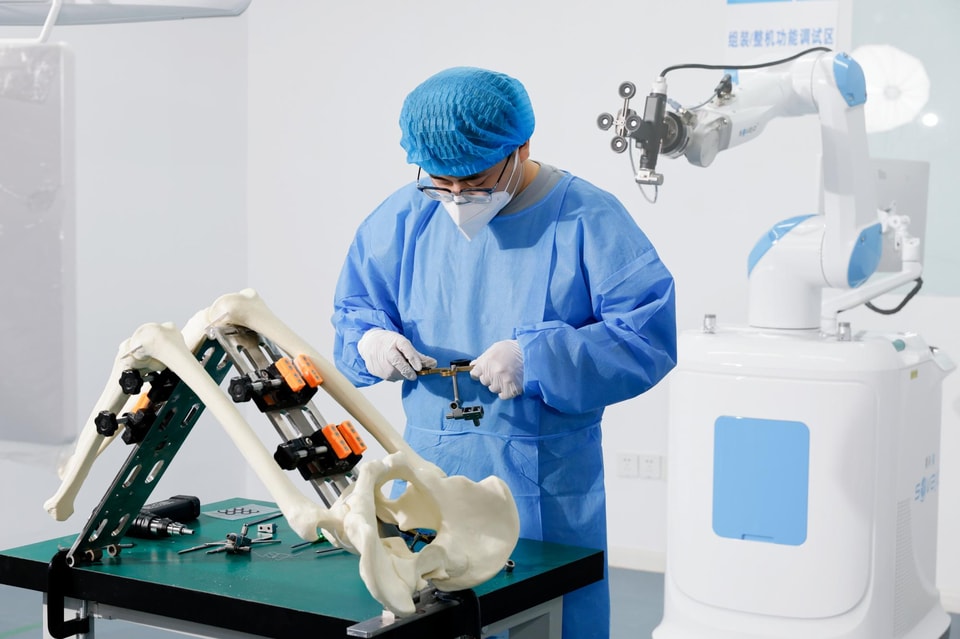
Digital Orthopedic Technology for Global Hospitals
Partner with Sovajo to improve surgical precision, clinical workflow and patient outcomes through intelligent medical robotics.
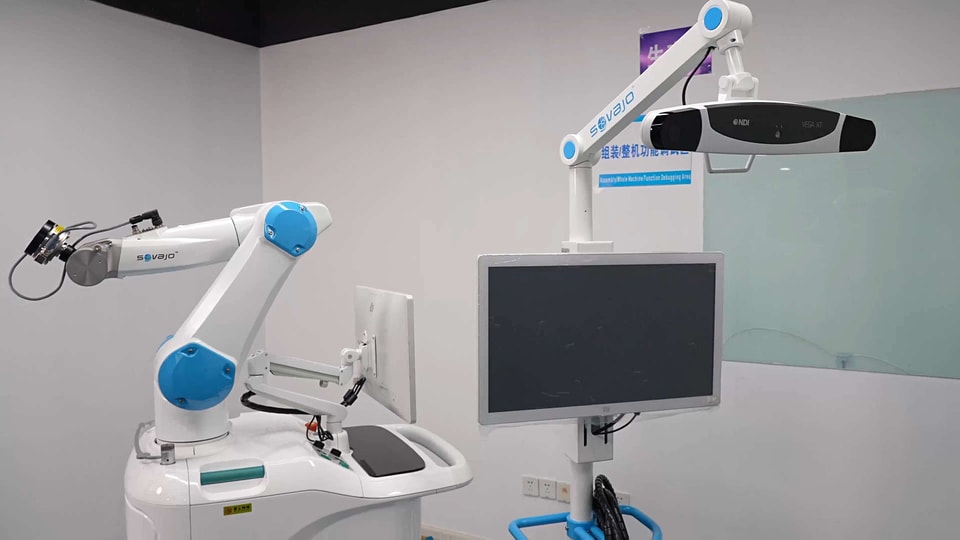
About us
High-Tech Pioneer in Intelligent Orthopedic Robotics
Sovajo is a high-tech medical pioneer dedicated to the R&D, manufacturing, and global distribution of advanced orthopedic surgical robots and intelligent clinical solutions. Driven by the mission to “make life science benefit the public,” we are advancing the frontiers of precision, minimally invasive, and digitalized surgery through cutting-edge innovation.
- Orthopedic Robotics
- NMPA Approved
- Global Leadership
- Core Technology
Product Details
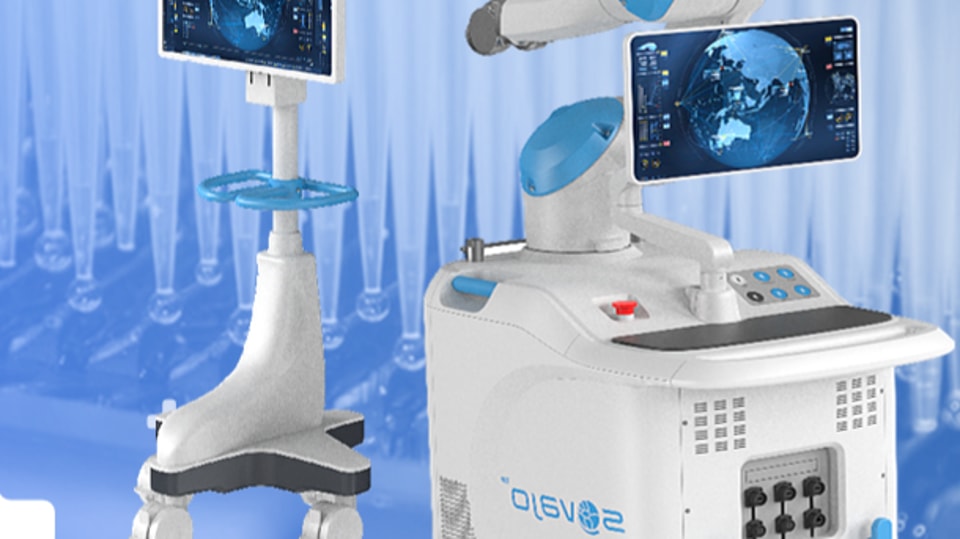
The Integrated Orthopedic Robotic Solution
Integrating knee, hip, spine and trauma surgeries on one unified platform, the system features 3D planning and sub-millimeter navigation for high-precision operations. With haptic feedback for safety control, it supports efficient minimally invasive surgery to boost surgical accuracy and clinical results.
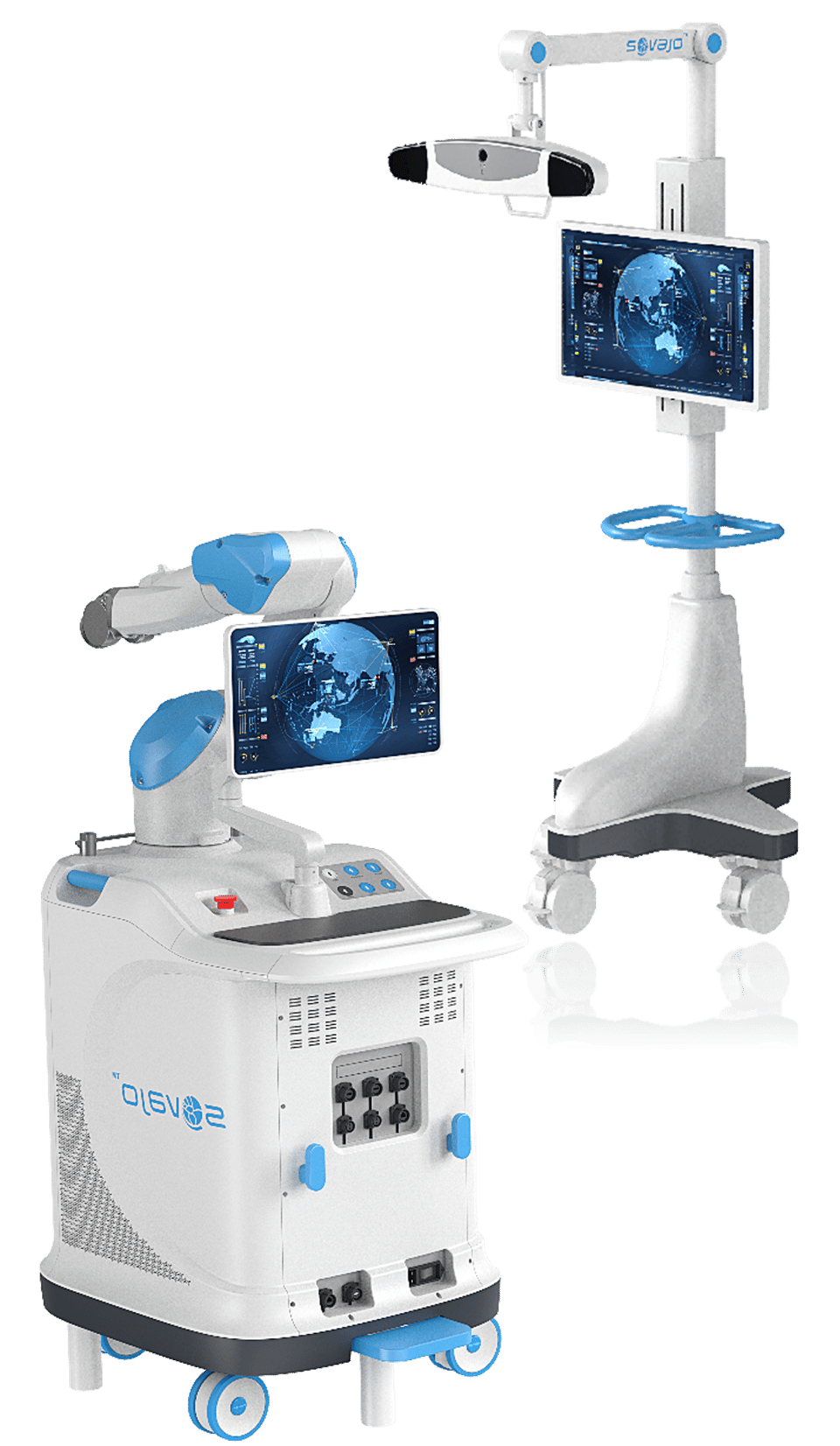
Total Knee Arthroplasty (TKA) Robot
Addressing the pain points in robotic clinical applications, designed for precision and efficiency
Integrated Simplicity
The robotic arm integrates an oscillating saw, eliminating cutting guides, leg fixators, and blade changes. A streamlined workflow that simplifies surgery and saves valuable OR time.
Exceptional Stability & Precision
Powered by a world-class imported medical robotic arm with proprietary motion and boundary control algorithms. Delivers sub‑millimeter accuracy: vertical fluctuation <0.3 mm, overall osteotomy error ≤1 mm—for reliable, reproducible outcomes.
Intelligent Safety with Haptic Boundary Control
Virtual boundaries are digitally defined around the cutting zone. If the tool approaches or exceeds the limit, power is cut instantly (millisecond response), providing active braking and eliminating the risk of unintended cuts.
Open Implant Platform
Compatible with a broad range of leading knee implant systems, offering surgeons the flexibility to choose the prosthesis that best fits each patient’s needs.
Unicompartmental Knee Arthroplasty (UKA) Robot
It is designed specifically for UKA procedures to enable truly minimally invasive surgery. It utilizes preoperative CT data to create a patient‑specific 3D plan, precisely defining the burring path to remove only diseased bone while preserving healthy tissue, ligaments, and cartilage. The high‑precision robotic arm executes the planned path with sub‑millimeter accuracy, ensuring optimal implant fit and restoring natural knee kinematics for faster recovery and improved patient satisfaction.
Integrated Power Tools
A single platform that integrates reciprocating saws, oscillating saws, and burs—eliminating the need for multiple devices and simplifying the surgical workflow.
Implant Flexibility
Compatible with a wide range of UKA implant designs, including both planar cutting surfaces and curved condylar geometries. Offers surgeons the freedom to choose the optimal prosthesis for each patient.
Sub-Millimeter Precision
High‑precision robotic arm executes the planned path with exceptional accuracy, ensuring optimal implant fit and restoring natural knee kinematics for faster recovery.
Total Hip Arthroplasty (THA) Robot
It features preoperative 3D planning to define the optimal implant angle and leg length. Intraoperatively, dynamic navigation delivers real-time sub-millimeter guidance, while haptic feedback actively restricts the tool within the virtual boundary to prevent bone damage.It also enables intraoperative verification of leg length and joint stability, minimizing dislocation risk and limb length discrepancy.
Sagittal Balance Assessment
A proprietary feature that evaluates sagittal alignment to guide implant positioning for improved stability.
Motion Collision Detection
Simulates implant placement prior to the actual procedure and provides real‑time feedback on key data.
Haptic Boundary Control
Restricts the tool within the virtual boundary to protect bone and prevent unintended damage.
Complication Risk Reduction
Helps avoid dislocation and limb length discrepancy caused by poor acetabular cup placement.
Spine & Trauma Robot
The system integrates with standard intraoperative C‑arm imaging to provide precise guidance for screw placement. The high‑stability robotic arm positions and guides instruments along the planned trajectory. Supports both 2D and 3D surgical planning—offering flexibility to match clinical needs.
High-Stability Robotic Arm
Provides a steady platform for precise instrument positioning and guidance during high‑risk procedures.
Standard C-Arm Compatibility
Works with existing C-arm device, no need for costly additional imaging, lowering the barrier to adoption.
2D & 3D Surgical Planning
Supports both two-dimensional and three-dimensional planning, offering flexibility to match clinical needs.
Precision-Guided Screw Placement
Transforms freehand techniques into guided accuracy, reducing radiation exposure for both surgeon and patient.
Our Services
Comprehensive Equipment Services
One-Stop Training
From basic operation to advanced surgical techniques, we provide all-around training for your sales and technical teams.
Professional Marketing
Ready-to-use brochures, high-quality surgical videos, and customized promotional plans for your territory.
Clinical Excellence Support
On-site engineers to assist with system installation, commissioning, and clinical application.
Round-the-Clock Reliability
Our 24/7 dedicated online service team is always available to resolve any technical or operational inquiries instantly.
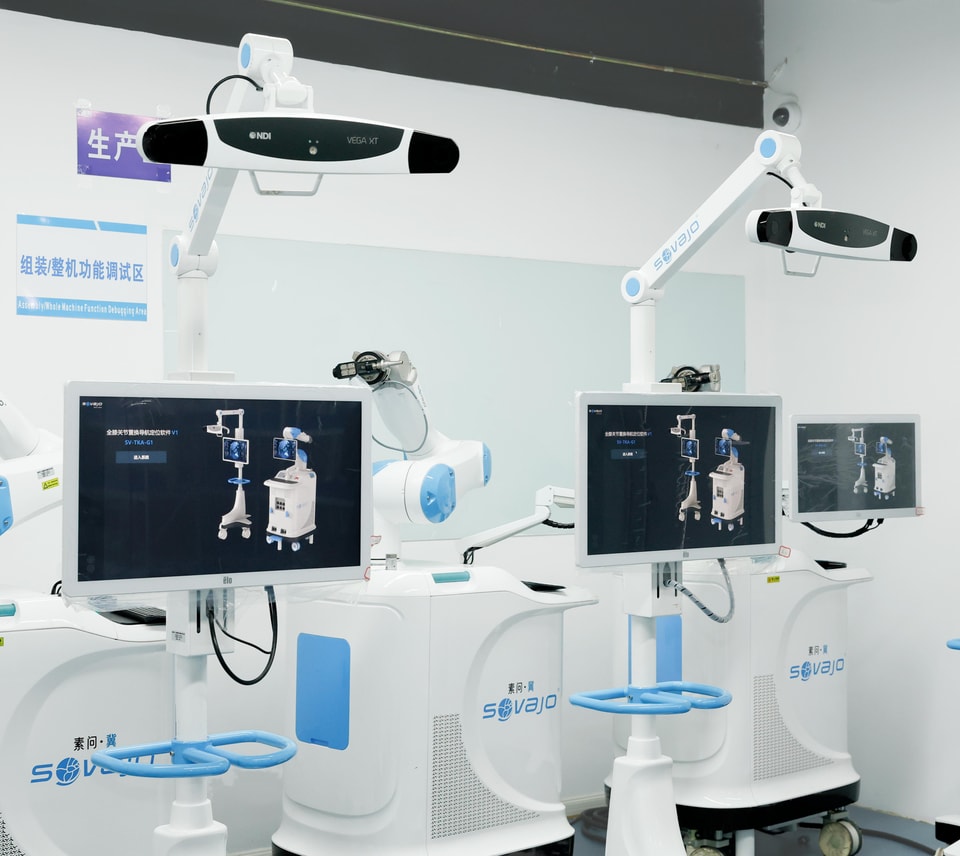
Grow Together with Sovajo
We don’t just supply robots; we provide a total solution for our distributors. Our "Full-Life Cycle" support includes:
Protected Territory Policy: Clear regional protection and incentive programs to ensure the profitability and long-term success of our partners.
News Feeds
Our Latest Blog
When we talk about success in total knee arthroplasty (TKA), the conversation often centers on alignment, implant longevity, or soft tissue balance. But there's one factor that silently determines whether a patient walks out of the hospital satisfied or frustrated: the patellofemoral joint. A forgotten patella can undo an otherwise perfect knee replacement. That's why patellar simulation—the ability to virtually model and predict patellar tracking and contact forces before a single bone cut is made—has moved from a "nice-to-have" to a clinical necessity. The Clinical Problem We Can't Ignore Anterior knee pain remains one of the most common complications after TKA, affecting up to 20–30% of patients in some studies. It leads to dissatisfaction, revision surgeries, and increased healthcare costs. The root cause? Often it's a mismatch between the implant geometry and the patient's native patellofemoral biomechanics. Traditional surgical planning tools treat the patella as an afterthought. But every patient has a unique patellar height, trochlear groove morphology, and Q-angle. Without patient-specific patellar simulation, we're essentially guessing how the patella will track post-operatively. How Patellar Simulation Changes the Game Patellar simulation allows the surgical team to: Visualize patellar tracking in real-time across the full range of motion—from extension to deep flexion. Identify potential "overstuffing" or "undercutting" of the patellofemoral compartment before making irreversible bone resections. Optimize implant rotation and femoral component sizing to restore the native trochlear groove. Reduce lateral retinacular release rates by proactively balancing patellofemoral forces. The result? A smoother postoperative recovery, less anterior knee pain, and a knee that feels more natural to the patient. The Value Proposition for Surgeons and Hospitals For surgeons, patellar simulation reduces intraoperative guesswork and revision risk. For hospitals and healthcare systems, it contributes to higher patient satisfaction scores, shorter lengths of stay, and lower 90-day readmission rates—key metrics in value-based care models. And for the patients? They get back to hiking, kneeling, and playing with their grandchildren without that nagging anterior pain. Looking Ahead: Simulation as the New Standard of Care We are entering an era where predictive biomechanics will define surgical excellence. Just as pre-operative templating for hip replacements became universal, patellofemoral simulation is on its way to becoming a non-negotiable step in modern knee surgery. In your practice, what is the biggest hurdle in managing patellar tracking? Experience or technology? If you've seen the impact of simulation in your practice, or would like to explore this technology further, let's start a conversation.
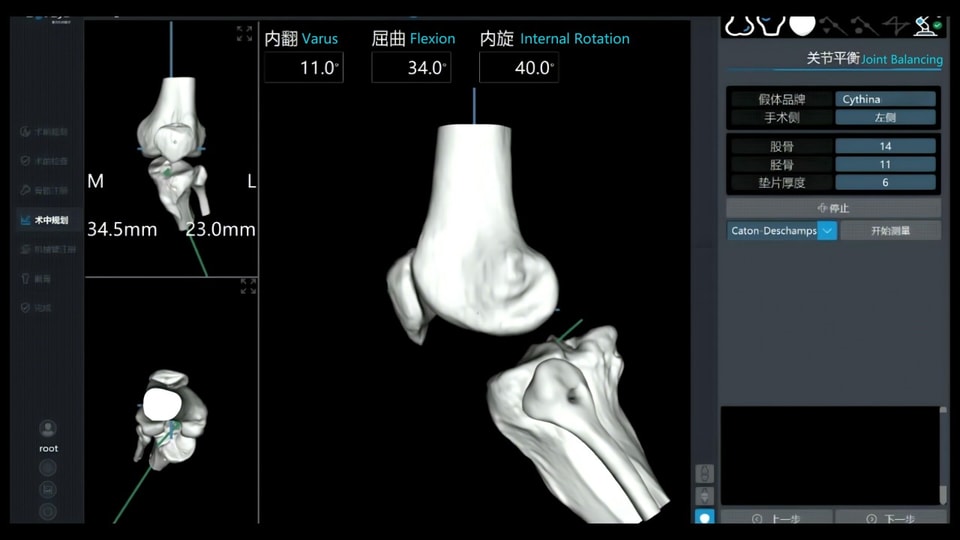
The rapid proliferation of robotic-assisted total knee arthroplasty (TKA) has presented surgical departments with a complex array of technological choices. Beyond the initial marketing appeal, the clinical utility of a robotic platform is defined by its mechanical architecture, its execution modality, and its integration into the existing prosthetic ecosystem. This review outlines the critical technical metrics that surgeons and hospital administrators must evaluate to ensure long-term clinical and operational success. 1. The Global Landscape: Architectural Archetypes The current market is bifurcated between established global platforms and emerging high-precision innovators. These systems can be categorized by their mechanical philosophy: Legacy Navigational Systems: Established platforms that focus on alignment and positioning, often utilizing smaller footprints or table-mounted designs. Integrated Semi-Active Platforms: Systems that utilize a dedicated robotic arm to assist or perform the bone resection. Within this category, a new generation of High-Rigidity systems, such as Sovajo, is challenging early industry standards by prioritizing mechanical stability as the foundation for accuracy. 2. Critical Evaluation Metrics for Surgical Procurement I. Registration Accuracy: The Sub-Millimeter Frontier While the first generation of robotic assistants established an industry standard accuracy of approximately 0.3 mm to 0.5 mm, engineering advancements have pushed the frontier further. Clinical Relevance: Surgeons should distinguish between "static planning accuracy" and "active registration precision." Newer high-rigidity platforms have documented a registration precision of 0.15 mm. This reduction in the margin of error is vital for complex cases where bone morphology is distorted, ensuring the physical execution matches the digital plan with the highest possible fidelity. II. Execution Modality: Semi-Active Systems vs. Passive Navigation A fundamental distinction lies in how the robot interacts with the surgical tool: Passive Navigation (The "Robotic Jig"): The robot positions a cutting guide, but the surgeon manually operates the saw. While this ensures alignment, it offers no protection against manual deviation or soft tissue injury during the cut. Semi-Active Execution (Integrated Tooling): Advanced platforms utilize a robotic arm that directly controls the instrument (e.g., an oscillating saw). III. Mechanical Philosophy: High-Rigidity vs. Flexible Arm Architectures The physical build of the robotic arm significantly impacts its performance under the stress of bone resection: Flexible/Lightweight Arms: Often designed for portability, these arms may require invasive leg-fixators to compensate for potential movement and lack of inherent resistance during the cut. High-Rigidity Arms: By utilizing a heavy-duty, high-rigidity arm, systems like Sovajo eliminate micro-vibrations during active cutting. IV. Ecosystem Architecture: Open Platform vs. Closed Loop The choice between proprietary and agnostic systems is a primary driver of long-term ROI: Closed Systems: These are tethered to a specific manufacturer’s proprietary implants. While integrated, they limit the surgeon’s clinical choice and can increase the hospital’s supply chain vulnerability. Open Platforms (Implant-Agnostic): Emerging leaders are adopting an open-platform philosophy. Synergy: A system compatible with multiple leading implant brands (various international lines) allows the hospital to leverage its existing inventory. This protects distributor margins and allows for patient-specific implant selection without robotic constraints. Conclusion: Defining the Future Standard For a surgical department, the ideal robotic investment is one that offers a "no-compromise" approach to execution. A platform that combines sub-millimeter precision (0.15 mm), the active safety of a semi-active system, and the mechanical stability of a high-rigidity arm represents the current pinnacle of orthopedic engineering. When these features are housed within an open-platform architecture, the result is a system that enhances clinical outcomes while maintaining maximum operational flexibility.
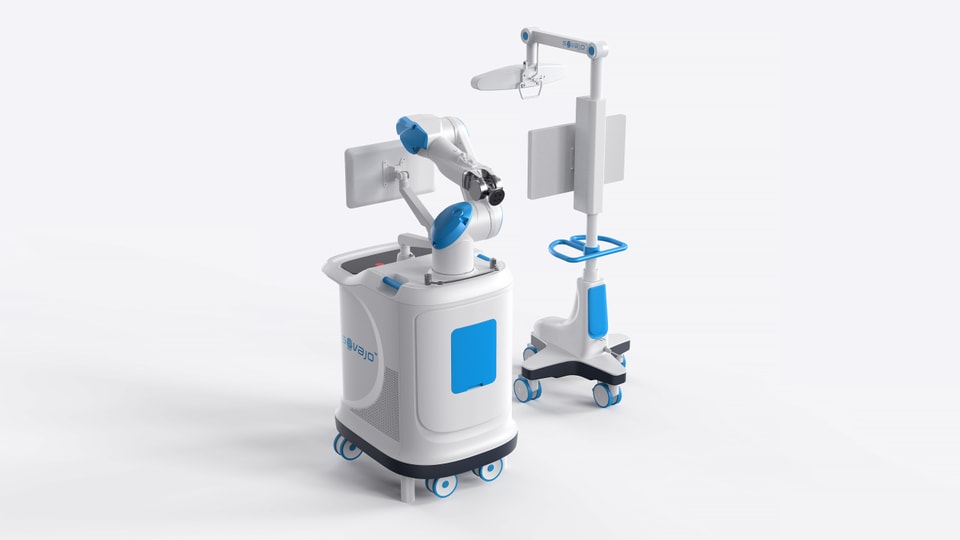
For years, orthopedic surgeons have embraced robotic assistance to improve TKA/THA outcomes. However, many early-generation systems brought their own set of clinical frustrations—specifically those utilizing "Flexible/Lightweight" robotic arms. The Common Surgeon Pain Points: ❌ Precision Instability: Flexible arms often suffer from micro-vibrations during active bone cutting, leading to osteotomy errors that can exceed 2-3mm. ❌ Procedure Complexity: To compensate for arm flexibility, these systems require invasive leg fixators/immobilizers to ensure the patient doesn't move an inch. This adds surgical time, increases soft tissue trauma, and complicates the workflow. ❌ Predictability Issues: Inconsistent rigidity means inconsistent results. The Sovajo Solution: Engineering Stability with High-Rigidity Arms 🎯 At Sovajo, we believe the robot should adapt to the surgeon, not the other way around. Our next-generation system utilizes a High-Rigidity Medical Robotic Arm combined with proprietary motion control algorithms to solve these legacy issues: ✅ Sub-Millimeter Precision: Our rigid arm minimizes fluctuations to ✅ Fixture-Free Workflow: No more cumbersome leg fixators. The stability of our system allows for a more natural, streamlined procedure that saves valuable OR time. ✅ Integrated Efficiency: With the power saw built directly into the rigid arm, you get a seamless, "integrated positioning and osteotomy" experience. Precision shouldn't come with the cost of complexity. It’s time to move beyond the limitations of flexible systems and embrace the power of Rigid Stability. 🚀 Discover the Sovajo difference. Experience the future of Orthopedic Surgery. #Orthopedics #SurgicalRobotics #MedTech #TKA #JointReplacement #HealthTech #Sovajo #DigitalHealth #OrthoSurgeon #Innovation #SoutheastAsiaMedTech
GET IN TOUCH
Contact Us
Contact Now
Location Address
Phone Number
Email Address
Whatsapp
Get In Touch